
Most people assume littermates turn out pretty similar. After all, they share the same parents, breed, and start in life. But spend a day with two families who adopted from the same litter, and you’ll quickly see that isn’t how puppy development works.
Environment drives far more of the outcome than genetics does. Food, sounds, training, and early social experiences all influence a dog’s long-term behaviour and temperament. Families rarely realise how much those early decisions weigh until the dog is fully grown.
The puppy home builds behaviour one small decision at a time. And if you’re about to bring a new puppy home, or you’re already in those early weeks, read on to see exactly what makes the difference.
Same Litter, Different Dogs: What’s Really Going On?
As we mentioned, environment, routine, and training drive temperament development. And research backs that up. A study published in Science found that breed explains less than 10% of behavioural variation between individual dogs.
You might be thinking that’s hard to believe (and honestly, it’s a common assumption). But genetics only give a puppy its potential. A pup builds its temperament through what it experiences, who it meets, and how consistently it’s taught over those first critical weeks.
While temperament testing can flag early traits, daily life determines how far those tendencies go. That’s why two dogs with identical bloodlines can grow into remarkably different adults, and the deciding factor is almost always the family they grew up with.
Why the Neonatal Stage Has So Much to Do With Your New Puppy
The neonatal stage covers the first two weeks of a puppy’s life, and it determines stress responses, adaptability, and emotional foundation for good (most owners don’t know this stage is already over by adoption day).
Think about it this way: a puppy born into gentle handling, varied sounds like a hair dryer or loud noises, and calm human contact learns the world isn’t something to fear. That exposure gives a pup the confidence to take on every positive training experience that follows. And it’s why we handle Pip and Rosie‘s puppies with care from birth.
Those first two weeks directly influence how a puppy responds to everything that follows. Solid food, vet visits, and vaccinations come later. And by the time families reach those steps, that groundwork is already set.
If you’re still in the planning stage, our guide on adding a puppy to your family covers what to prepare before your pup even comes home.
Once a puppy settles into its new home, training and daily routine take over from there.
Dog Training Methods That Send Puppies Down Very Different Paths
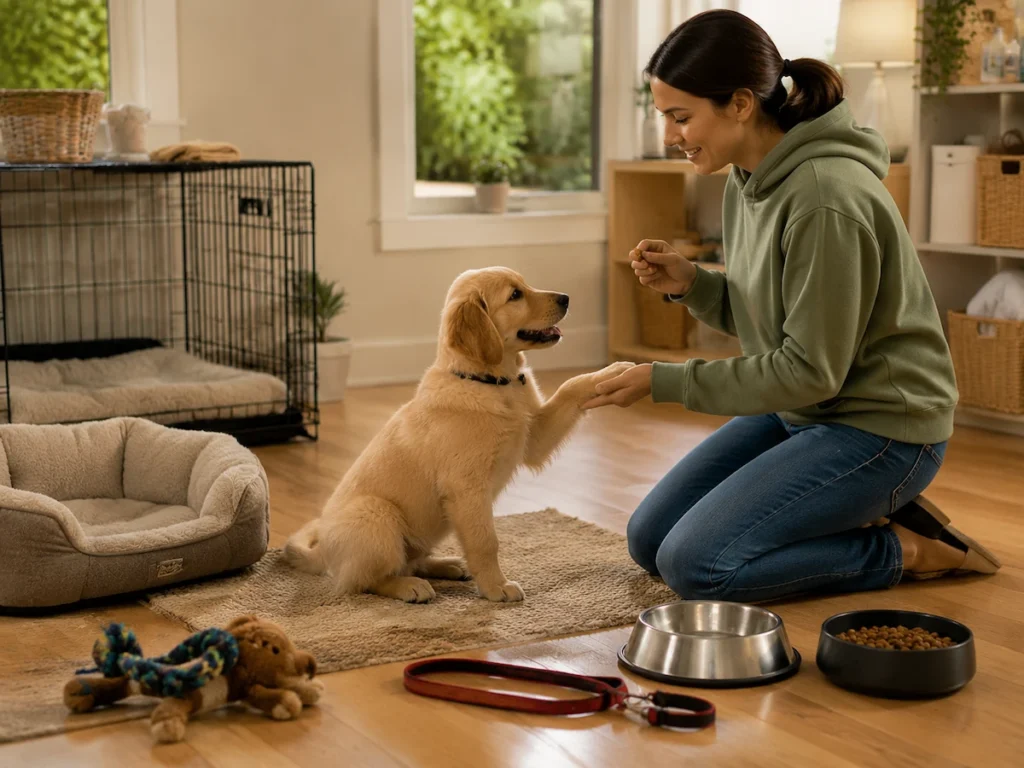
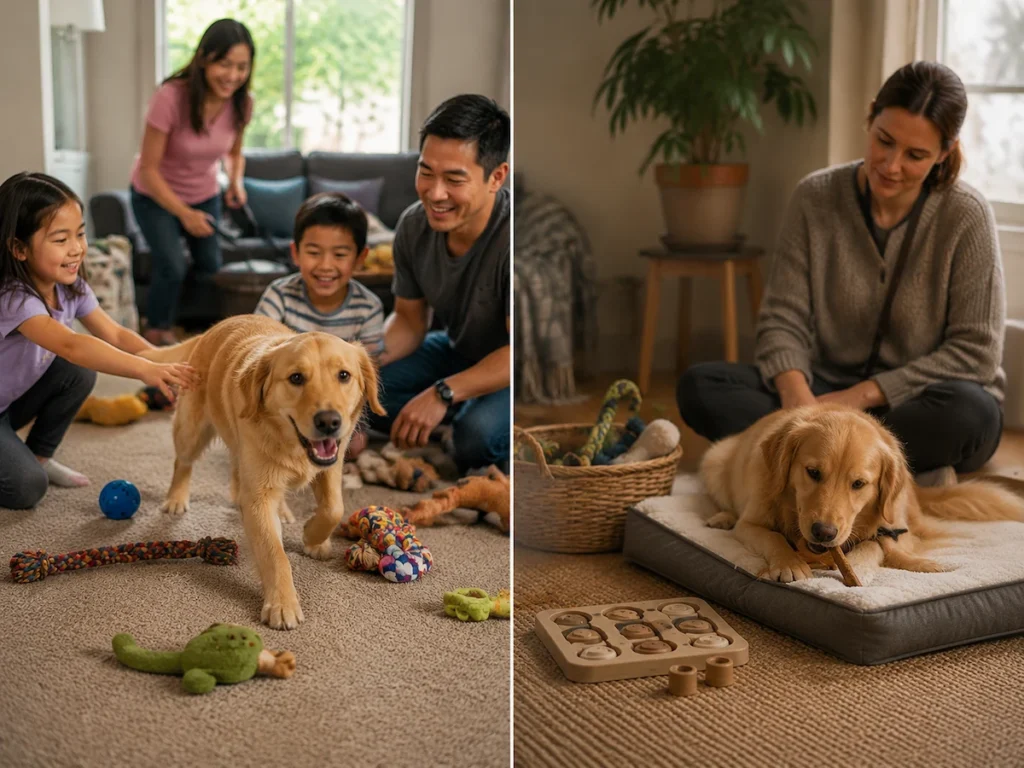
Two families can adopt from the same litter and take completely different approaches to raising them. Their approach drives the result considerably more than effort alone, and families that get on the same page early tend to see progress much sooner.
Those differences show up most clearly in two areas: daily routine and socialisation.
Building Desired Behaviour Through Daily Routine
Want a puppy that listens and settles well? Then a consistent daily routine is where that starts.
Dogs learn through repetition. A puppy that follows the same feeding schedule, rest periods, and training sessions each day starts to understand what’s expected. Once that rhythm clicks, positive reinforcement through treats, verbal praise, or toys teaches basic commands with far greater consistency than correction-based methods.
From there, leash training and crate time give a puppy the tools to stay calm when things get unpredictable. Without that grounding, barking and shutting down become the default response.
Dog Parks, Socialisation, and the Reactive Dog
Routine builds behaviour at home, but socialisation determines how your puppy reads the world outside.
Dog parks are one of the best places to develop that exposure. They put puppies in front of other dogs, new people, and unpredictable environments they’d never encounter at home. That said, visiting dog parks too soon puts an unvaccinated puppy at direct risk of parvovirus, distemper, and other infectious diseases.
Most vets recommend waiting until a puppy is fully vaccinated at around 16 weeks before any off-leash park visits. Before that point, puppy classes give pups a controlled setting to meet other dogs and build social skills safely.
Keep in Mind: A puppy that rarely meets new dogs or explores unfamiliar places stands a much higher chance of becoming a reactive dog. Puppy enrichment activities like scent games and short neighbourhood walks can fill that gap during the weeks before vaccinations are complete.
Separation Anxiety, Safe Spaces, and the Puppy Home Setup
Any family bringing a new dog home will face the same challenge sooner or later: teaching them to spend time alone. And how that goes in those first few weeks influences everything from sleep quality to stress levels down the road.
Here are three things that genuinely shift outcomes in the puppy home:
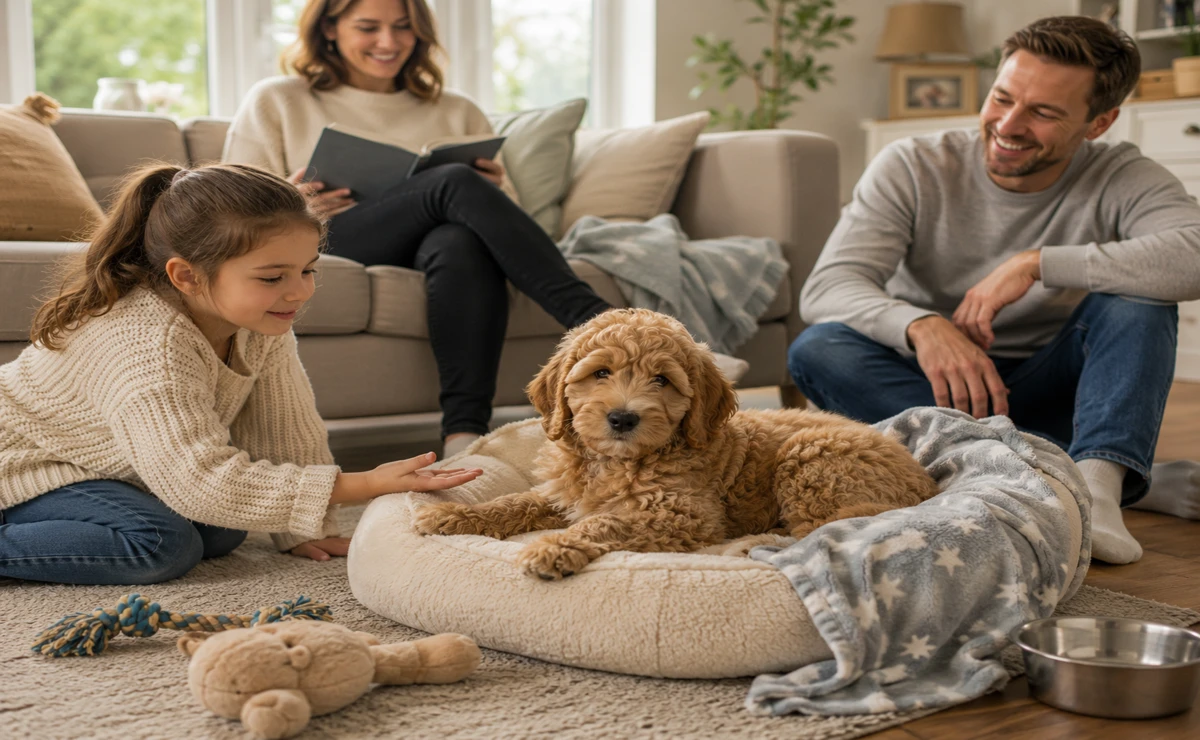
- Set Up a Safe Space Early On: A crate or dedicated corner gives a puppy somewhere consistent to rest and decompress (and it doesn’t need to be fancy). Puppies with their own spot eat, sleep, and self-settle far more reliably than those left to roam the whole house. It also gives other pets in the home room to adjust at their own pace.
- Introduce Alone Time in Small Steps: Separation anxiety develops when puppies never learn that solitude is normal. Start with just a few minutes, then increase that window week by week. A puppy that grows comfortable with this process rarely hits a wall with it later on.
- Watch for Early Warning Signs: Biting, restlessness, and refusing to eat are often the first signals a puppy isn’t coping. If those signs persist, a vet check helps rule out anything physical.
To be honest, setting the puppy up thoughtfully from day one is one of the most practical investments any new owner can make.
Can an Adult Dog’s Behaviour Really Change?
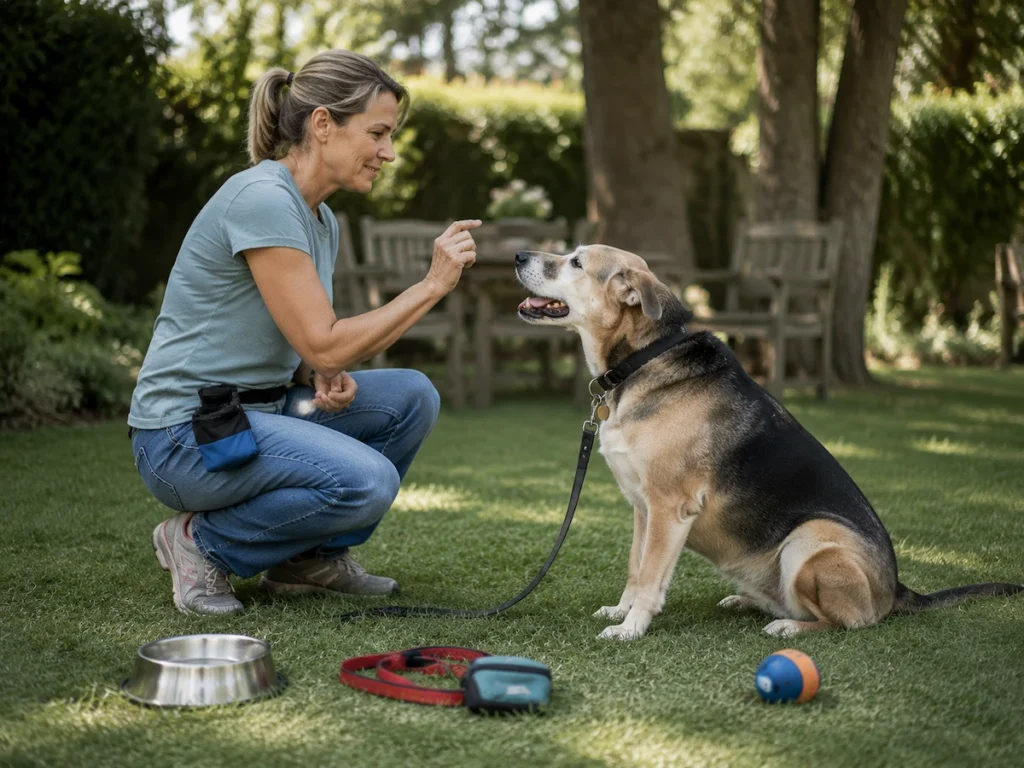
Yes, but habits formed in puppyhood take considerably more time and effort to change in adulthood.
Dog behaviour doesn’t freeze the moment a puppy turns one. Adult dogs can still learn new skills, respond to reward-based dog training, and walk away from patterns that no longer serve them. However, the window for easy wins is smaller. A three-year-old dog with deeply ingrained responses needs more deliberate work than a ten-week-old pup with a blank slate.
Food is part of that picture too. Most vets recommend switching to adult dog food somewhere between 12 and 24 months, depending on the breed and size of the dog. Pairing that transition with fresh training goals gives the whole programme a natural reset point. Families who’ve brought puppies home from us and committed to daily structure from week one rarely find themselves needing to undo much at all.
That said, it’s never too late to course-correct. A professional trainer can certainly help with a confident adult dog, and fetch training is a surprisingly effective place to start rebuilding focus and genuine engagement.
The Dog They Become Is Up To You
New owners often start this journey with high hopes and a rough idea of what to expect. What catches them off guard is how much those small, unglamorous daily decisions influence the dog they end up with.
That’s the real takeaway here. It doesn’t matter much which breed a family chooses or how good their intentions are. What moves the needle is showing up consistently, week after week, in the right ways.
At Oodle Pups, we help new owners do exactly that from day one. Explore our resources on puppy development, training, and everything in between to give your pup the best possible start.