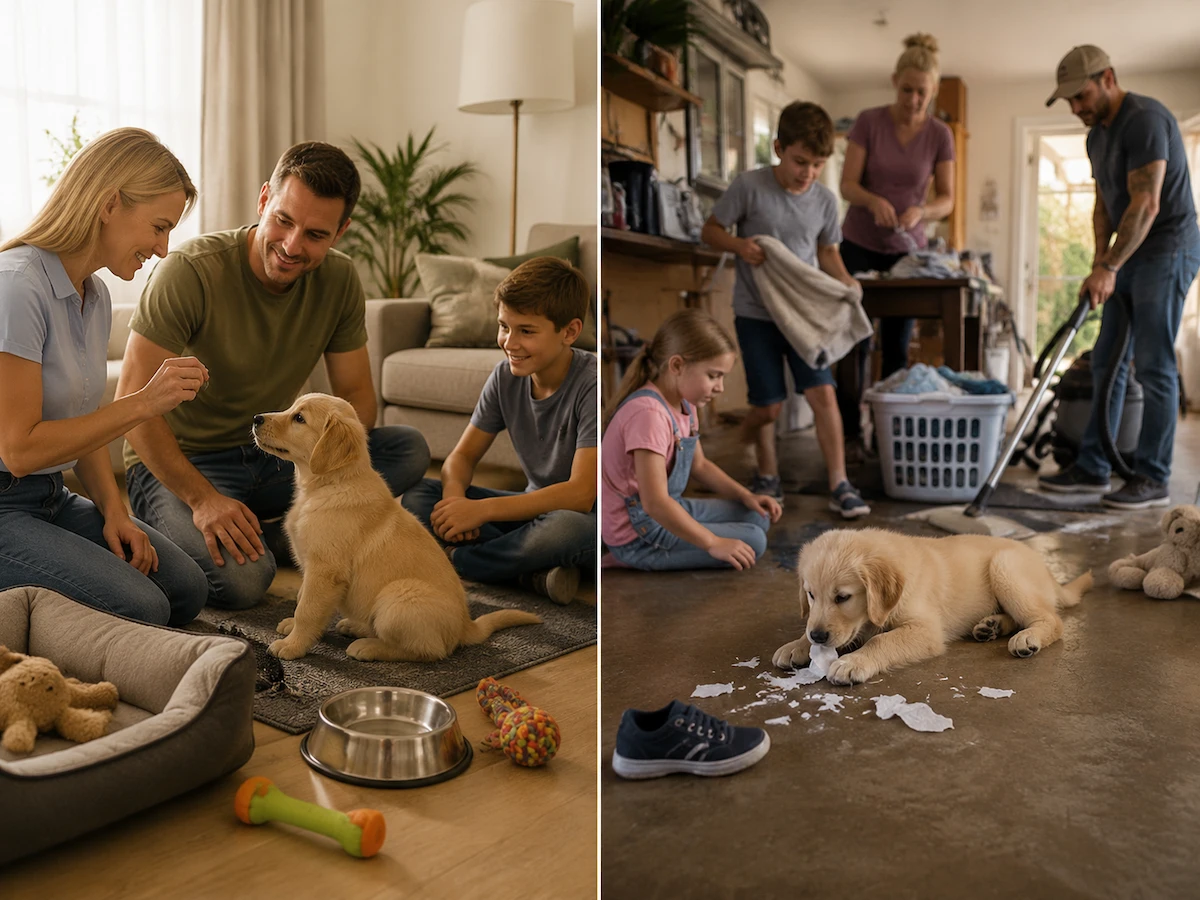
That first week with a new puppy is a rollercoaster. One minute your oodle pup is napping in your lap. The next, you’re cleaning up an accident on the kitchen floor. And most families aren’t prepared for how fast the chaos builds once the puppy is home.
At Oodle Pups, we breed multi-generational Australian Labradoodles here in Brisbane. Pip and Rosie are our own two girls, and we stay in touch with every family long after their puppy leaves us. All of that experience went into this guide.
You’ll learn where owners go wrong with oodle puppy training in the first 30 days. It also covers how to build a routine your puppy’s home life can rely on, and when to ask for help.
Nothing here is hard to prepare for once you know what to expect.
What Most First Puppy Owners Get Wrong in Week One
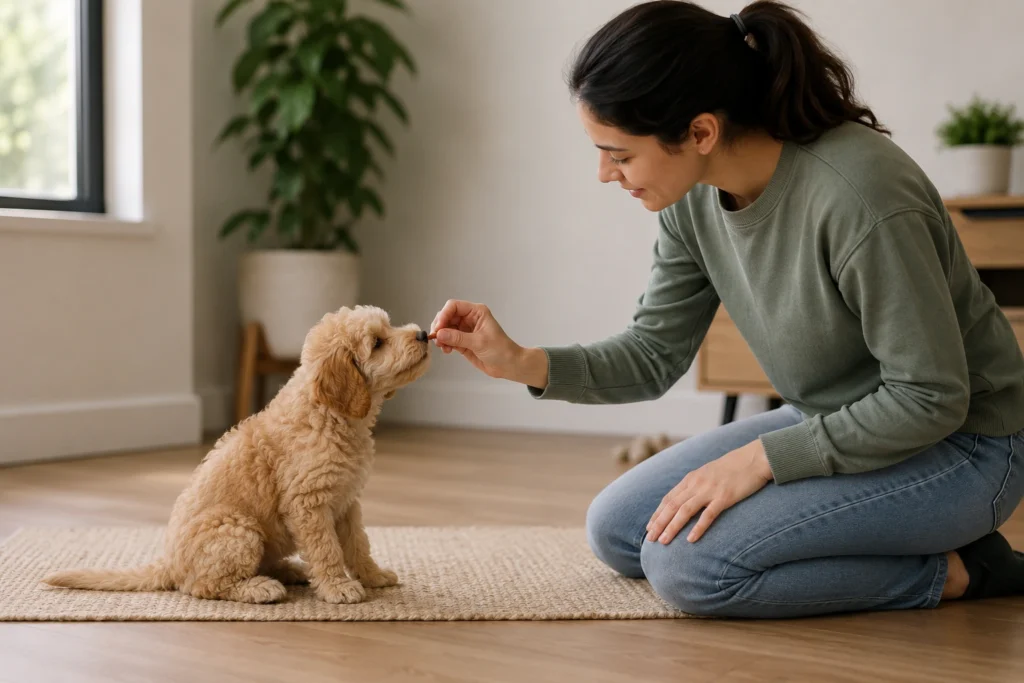
Most first puppy owners give their pup full run of the house from day one. The puppy roams room to room, gets overwhelmed by the new environment, and never settles. It’s the same pattern with almost every family we place a puppy with.
Start by reducing the space your puppy has access to. Your pup will feel safe much sooner in a crate, a playpen, or behind baby gates in the hallway. That quiet spot gives them room to rest without the stress of an entire house.
The other common mistake is every family member doing things differently. One person lets the puppy on the couch, another doesn’t. Set your house rules in the first week and make sure every person sticks to them. Once those rules are consistent, you can try adding short periods of alone time to help prevent separation anxiety before it takes hold.
Quick Note: The RSPCA covers this well in their guide on bringing home a new puppy, and it lines up with what we see at home.
House Training Your Oodle Puppy Without the Stress
A solid house-training routine in the first few weeks saves you months of cleanup in later years. Your puppy can’t tell you when it needs to go, so potty training comes down to your schedule, not theirs.
A few habits help from week one:
- Outside After Every Transition: Take your puppy out after every nap, meal, and play session (yes, even at 5 a.m.). A treat each time helps your pup build the connection with a reward.
- No Punishment for Accidents: Scolding only teaches your puppy to hide it next time. Positive reinforcement builds the habit without the fear.
- Consistent Feeding Times: Giving your puppy food at the same times each day makes toilet breaks predictable.
Remember, a crate or baby gates between outings keep your pup contained and accidents easier to spot. Now, toilet training may cover the indoor side. But your puppy also needs the right experiences outside the house.
Puppy Socialisation Beyond the Dog Park
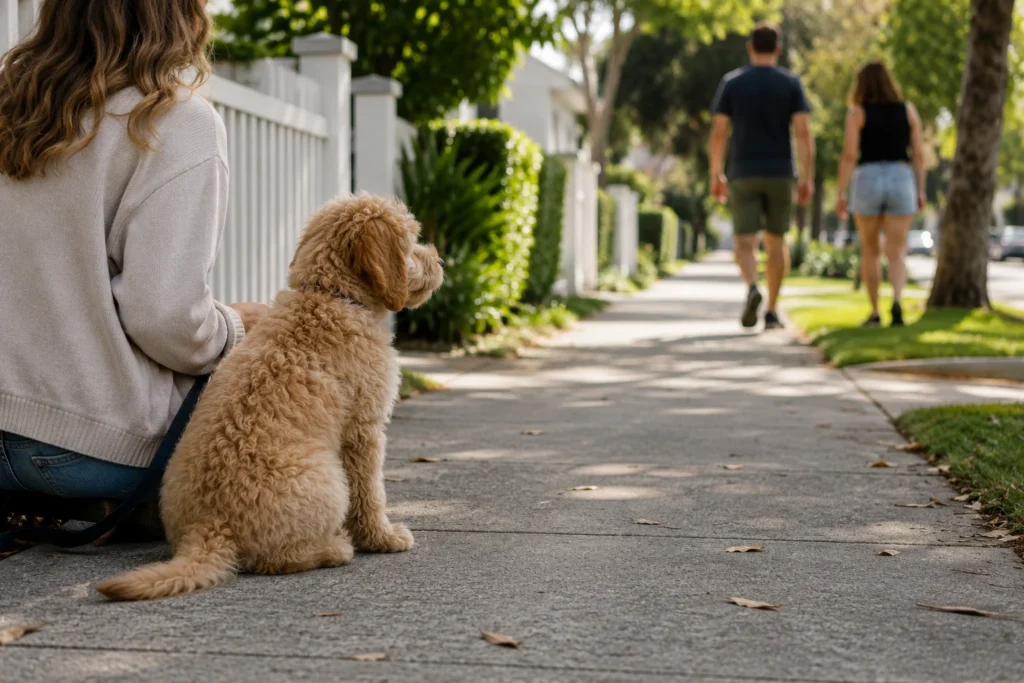
Most owners think socialisation means letting their pup play with other dogs at the dog park. A young puppy in the critical socialisation period can’t handle that level of intensity (that kind of setback can stick with a dog for a long time).
Believe it or not, a quiet walk past a bus stop does more for your puppy than a crowded off-leash area. Your pup needs exposure to different sights, sounds, smells, and people before 16 weeks of age. A friend’s calm older pet or a café with foot traffic both count as positive, varied experiences.
Your puppy shouldn’t visit shared dog spaces until after their second vaccination. So, carry your pup somewhere quiet instead, or invite a fully vaccinated friend’s dog over. Early puppy socialisation at this stage looks low-key, but it builds a confident adult dog.
Now, most owners around this point also start asking about formal training.
When to Start Puppy School and When to Call a Dog Trainer
Puppy school between 8 and 16 weeks gives your pup the best start with reward-based training. Not every issue needs a classroom, though. Sometimes one-on-one advice from a dog trainer is the better call.
Let’s have a clear look at the timing and the signs you need to look out for:
Puppy School Timing
Group classes work well early on because your puppy is still in that socialisation window. A good training program will include short sessions with play, treats, and fun to keep your pup engaged.
Your dog will also pick up how to follow cues with distractions all around.
Signs You Need a Dog Trainer
Some behaviours don’t settle on their own. If your puppy shows ongoing fear or heavy reactivity, book a vet visit to rule out pain. A dog training plan built around those behaviours is the next step. We talk to our families well beyond pickup day and see how this plays out. The ones who seek advice early always come back with a calmer pet.
Even with training sorted, there’s a side of the first month that catches most owners off guard. And we’ll get into it below.
Puppy Blues: What No One Tells New Puppy Owners
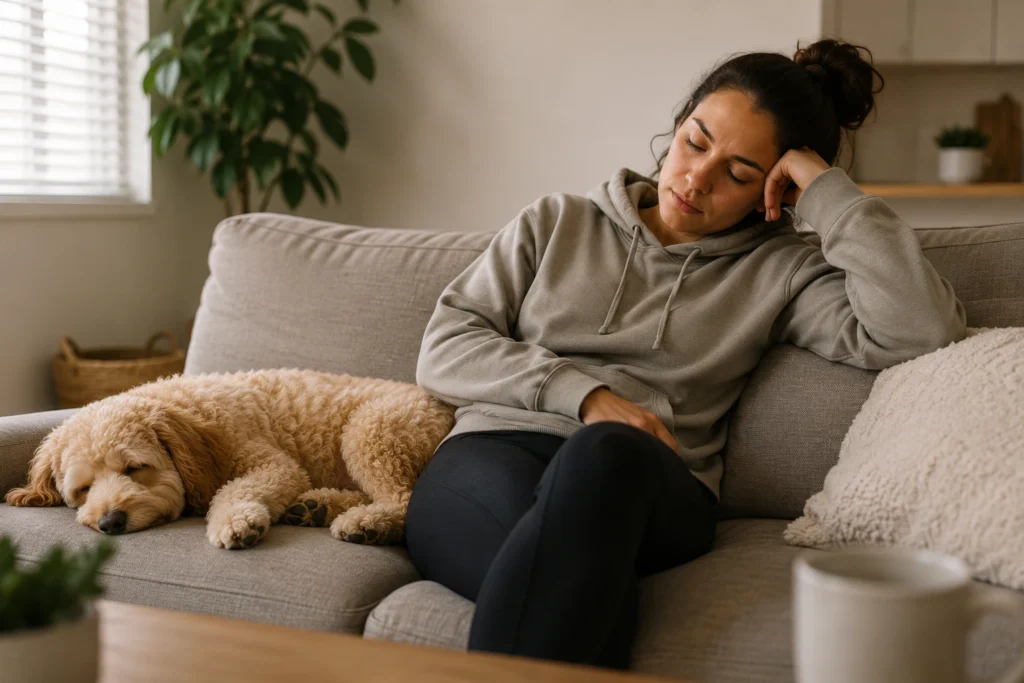
The puppy blues hit most new puppy owners around week two, right when sleep deprivation and constant supervision wear you down (we hear about it from new owners more often than you’d think).
You might feel like you’ve made a terrible decision; that’s completely normal. A new puppy parent’s life changes overnight. Your rest is broken, and your pup needs you every few hours. If you had other pets or a dog from a previous owner, this stage feels heavier because you’re comparing a new pup to one that already knew the routine.
Fortunately, the fog does eventually lift. Most puppy owners feel secure by week three or four. So, stay calm and let the routine do its work. Your dog isn’t giving you a hard time. Your dog is having one. By month two, the real personality behind those paws starts to show.
Your New Dog at Day 30: What Puppy Training Looks Like From Here
By now, your new dog has a routine, knows a few cues, and is settling into life at home. That doesn’t mean you’ll have a well-behaved adult dog by tomorrow, though. Puppy training takes time, and real progress with good behaviour shows between months two and four.
So keep the training consistent, stay in touch with your vet for regular pet care advice, and give your pup room to grow. You can prepare for your puppy journey or brush up on any stage through our resource page. That chaotic little pup is already on the way to becoming your best friend.