
You’ve done the research, picked your breed, and brought your Oodle puppy home. But now she won’t stop crying at night or following you from room to room. Sound familiar?
How well a puppy was socialised before arriving often explains why. We’re Oodle Pups, a Brisbane breeder of multi-generational Australian Labradoodles. Across every litter our girls Pip and Rosie have had, the pups with more early exposure settle into family life faster.
This guide covers what helps your puppy adjust. We’ll walk through breeder habits, daily routines, training, and the milestones that build confidence over time.
What Puppy Socialisation Does Before Your Oodle Comes Home
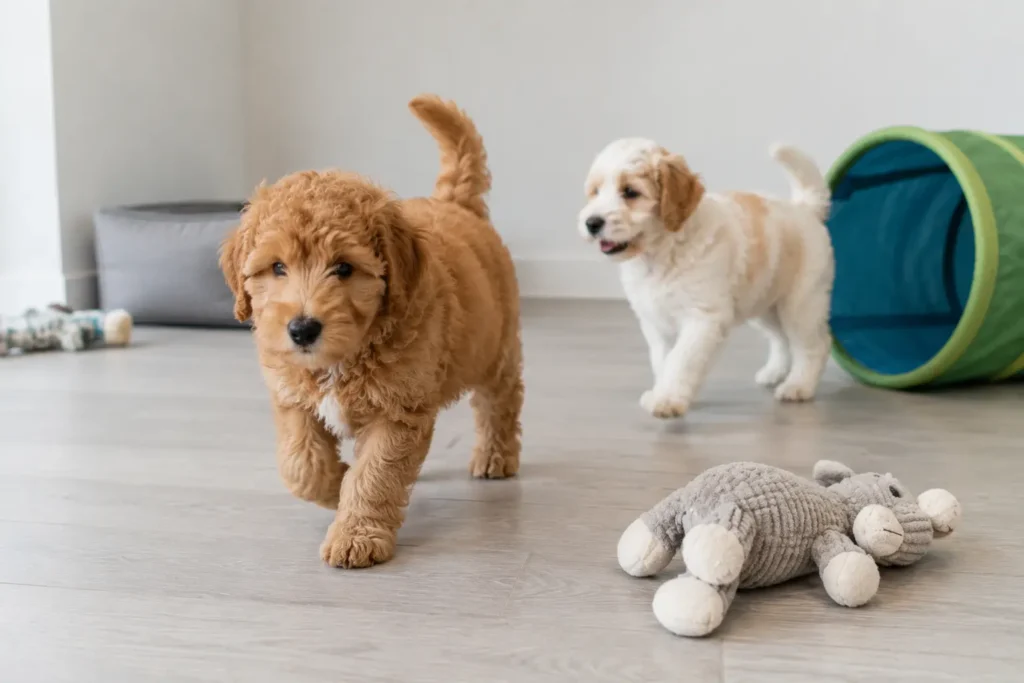
A puppy’s first eight weeks are when confident behaviour begins. Breeders introduce pups to different sounds, smells, and people during that window.
With Pip and Rosie’s litters, our puppies hear loud noises like the vacuum and the neighbour’s kids well before they leave their mother and siblings. That kind of early puppy socialisation builds habits that carry into adulthood.
Positive experiences at a young age shape how a pup responds to the world around her:
- Gentle Handling From Birth: Regular touch from the first week teaches a puppy that human contact is safe. She’ll be far less likely to flinch when her new family picks her up.
- Loud Noises and New Surfaces: Exposure to unfamiliar sounds and environments trains a pup’s brain to stay calm. Dogs who miss this stage often freeze or bolt at anything unexpected.
- Individual Temperament Checks: Not every animal in a litter responds the same way. Testing each puppy’s temperament helps breeders match the best dog to each family.
Socialisation at this level gives a puppy familiar ground to stand on. Once that early groundwork is in place, the next big shift happens the day you bring them home.
Bringing Home a New Puppy: The First Week
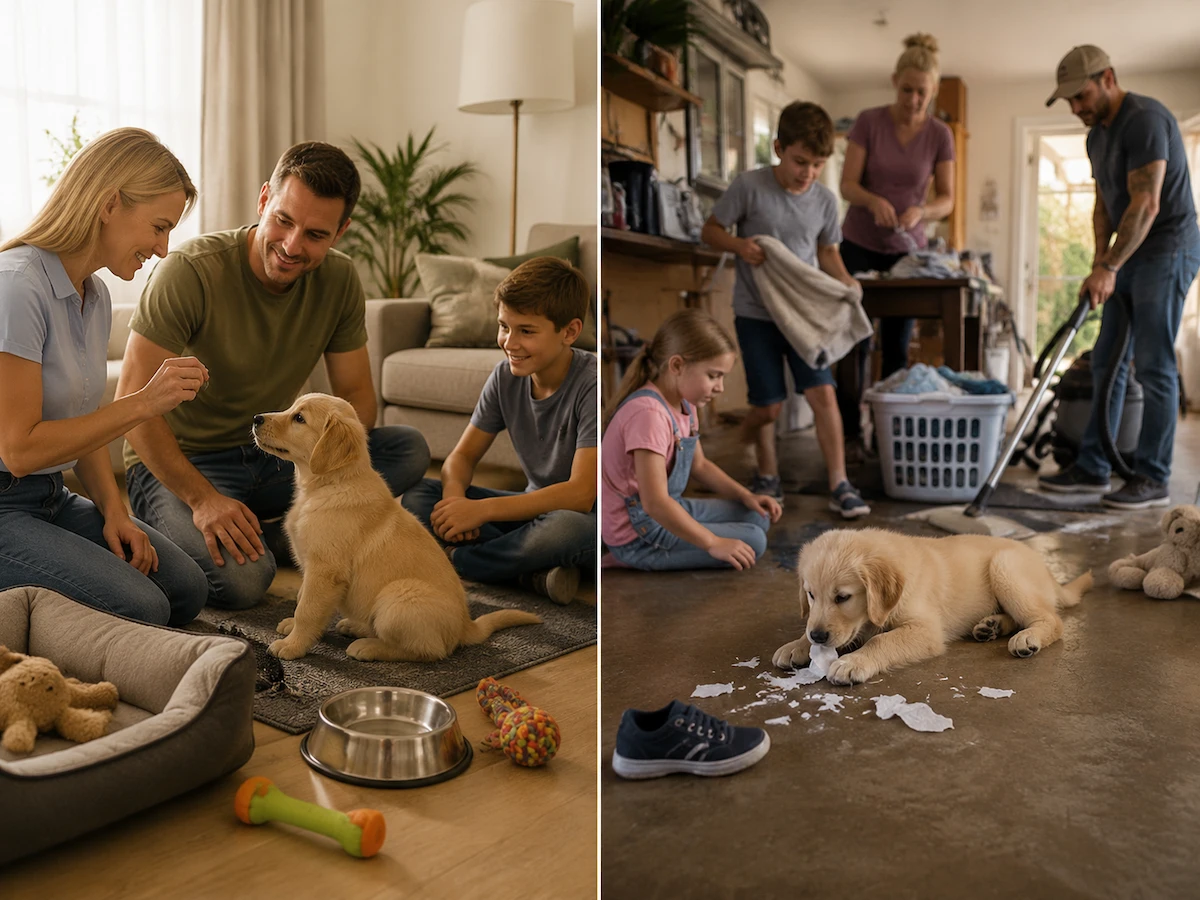
Honestly, the first week is mostly chaos, and that’s completely normal. Your puppy just left her mother, siblings, and the only home she’s ever known. Everything in your house is unfamiliar: the smells, the sounds, the people.
So she’ll likely cry through the night and have accidents on the floor (especially at 2 am). None of that means something is wrong. She’s just adjusting to new surroundings and needs a chance to feel safe.
The fastest way to help is a predictable routine. Set feeding times, regular toilet breaks, and a consistent sleep spot give your pup something to rely on. A crate or quiet corner also works well for rest when the noise gets too much.
Keep in Mind: Bringing home a new puppy is a big change for any family, and hand-feeding during those first days helps your dog learn to trust you sooner.
The Puppy Home Adjustment Period No One Warns You About
Most Oodle puppies take two to four weeks to settle in. Our families often message around the two-week mark, worried that something’s gone wrong. It almost never has.
A few things during this stage are completely normal, even if they don’t feel like it:
- Toilet Training Setbacks: Your pup might forget everything about going outside. Most dogs go backwards before they go forwards, and potty train regression is part of the process.
- Broken Sleep at Night: Whining and early wake-ups are common in the first few weeks. Your puppy is still learning her new routine in an unfamiliar environment. It doesn’t feel like progress at the time, but it is.
- Pushing Every Boundary: She’ll ignore commands she followed only yesterday. Patience and consistency here prevent behavioural problems down the track.
This stage won’t last forever. But how you respond during it will influence your pup’s behaviour for months to come.
Why Puppy Training Needs to Start on Day One
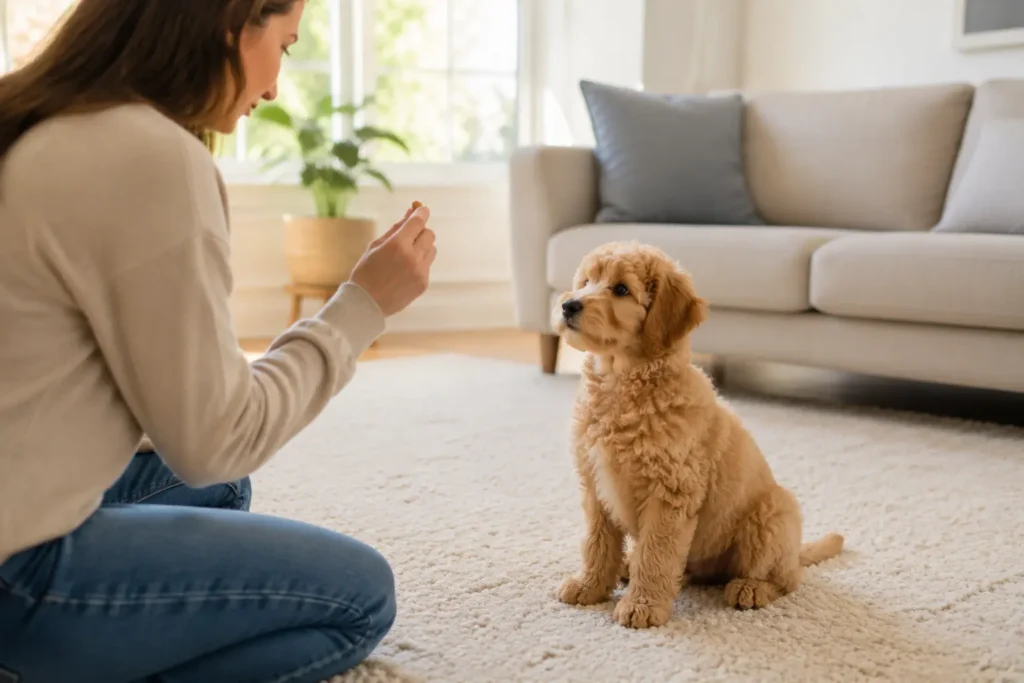
Even while your pup is still adjusting, she’s already learning. That’s why training can’t wait. The habits your puppy picks up in the first 48 hours will stick, good or bad. If you wait a week to start puppy training, she’ll already have her own version of the rules.
So the sooner you set expectations, the better. Even 5 minutes of reward-based training before a meal teaches your dog what you expect. Try asking her to sit before the food bowl goes down, and reward calm behaviour when she rests instead of jumping (and she will test you on this). That kind of repetition builds positive associations your puppy will carry into adulthood.
The same sometimes works in reverse, though. Bad behaviour like demand barking often starts because no one corrected it early. Puppies pick up patterns quickly, so unwanted behaviours stick just as easily as good ones.
A few training videos from YouTube or a reputable online dog training platform can point you in the right direction. From there, consistency across your household is what keeps it all on track.
How Puppy School and Dog Park Visits Build Confidence
You wouldn’t expect a child to make friends without ever leaving the house. Puppies aren’t much different, and that’s exactly why socialising your puppy early gives her the positive experiences she needs to stay confident around other dogs and different people.
Once the basics are down, structured outings help your pup build on what she’s learned inside:
- Puppy School Sessions: Group classes teach commands alongside young animals in a controlled setting (usually from around 12 weeks, once first vaccinations are done). You’d be surprised how much one session changes behaviour back at the house.
- Dog Park Visits: Supervised dog park time after your pup is fully vaccinated introduces her to older dogs and varied play styles. Pups who skip these outings often become reactive on the lead later.
- Building Real Confidence: Enjoyable socialisation with other pets at a young age helps dogs handle vet visits and loud noises with far less stress.
Pups who get regular outings during these early months tend to stay calmer in new situations as adults. That confidence shows up at the park, on busy footpaths, and during noisy family gatherings.
Why Separation Anxiety Shows Up and How to Handle It
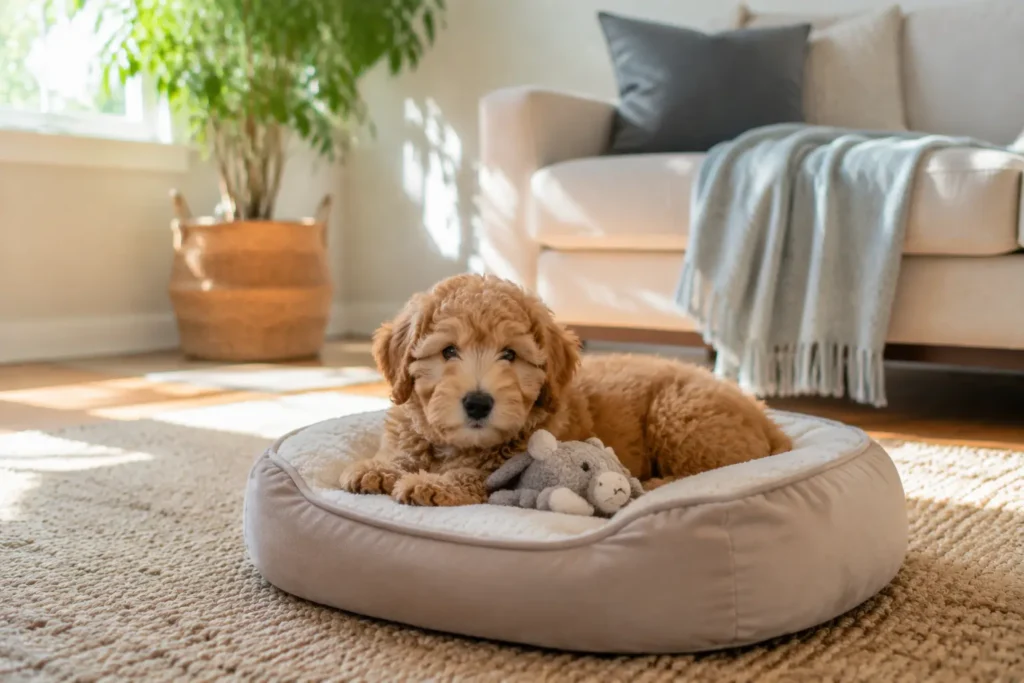
Confidence around other dogs is one thing, but being alone is a completely different challenge. Oodles bond closely with their families, so separation anxiety can surface once your puppy realises you’re not always nearby.
When that happens, you’ll see it. Constant barking, destructive chewing, and toileting inside the house are common signs. These behavioural issues aren’t your pup being naughty. She doesn’t yet understand that you’re coming back.
Even two minutes in another room counts as practice. That’s where you start. Leave for short periods, then return calmly without a fuss. Toys and a crate with familiar smells can help her feel secure while you’re away.
And if the anxiety continues, a veterinarian or local animal behaviourist can help you build a routine that works for your dog’s mental health.
Family Dog Training Is What Ties It All Together
All the socialisation and training in the world won’t hold if your household isn’t on the same page. Every family member needs to use consistent commands, limits, and reward cues. Your new dog picks up on mixed signals fast, and that confusion will slow her progress.
When everyone follows the same approach, your pup learns more quickly and settles into life with far fewer setbacks. She’ll test the rules less often and build a stronger bond with the whole family. Family dog training works best when nobody gets a free pass.
If you’re after advice on raising a well-adjusted Oodle, Oodle Pups is always happy to help.